Water moves the salt. The salt breaks the wall. Treat one without the other and the wall comes back.
Talk it throughRising Damp Newcastle arranges damp assessments across Newcastle and the Hunter.
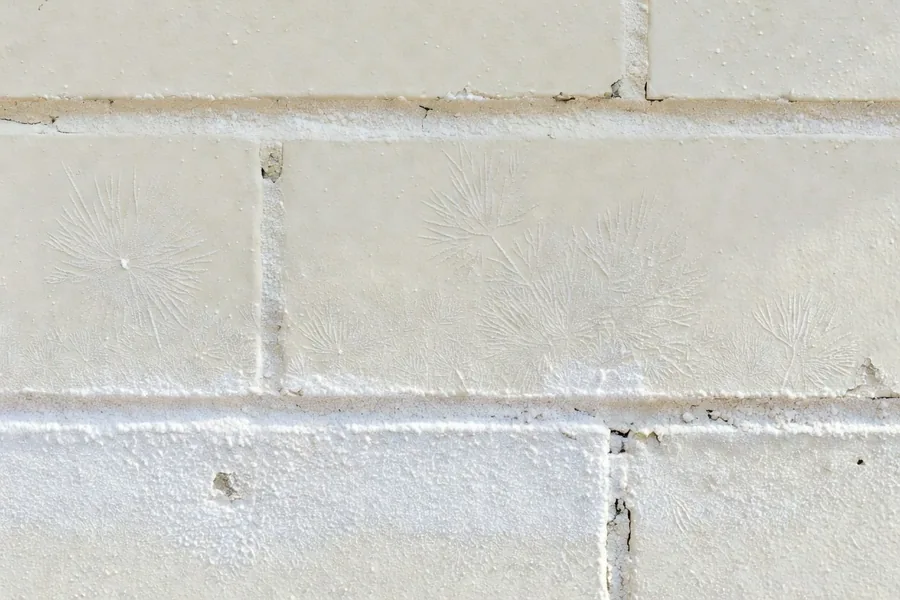
Dissolved salts travel up a wall with the groundwater and are left behind when it evaporates at the surface. Inside the pores of the brick and mortar they crystallise, and crystallising salt expands with enough local force to push render off and take the face off a brick. The wall is not dissolving. It is being levered apart from the inside.
From Merewether round through Bar Beach to Stockton, salt also arrives on the wind and settles on the outside of the wall. Salt is hygroscopic — it pulls moisture out of humid air on its own — so a coastal Newcastle wall can read damp in a dry spell purely because of what is already in it. Treating the groundwater and leaving the salt is half a job.
A sand spit with water on three sides gets the airborne load from every direction and has a water table that is never far down. Surface damage there — powdery mortar, blown brick faces — is often well advanced before anyone uses the word damp at all.
Contaminated render is removed rather than painted over. Where contamination is heavy the wall may be poulticed to draw salts out before anything new goes on, and the replacement is a salt-retarding, breathable system that holds the remaining salts back from the finished surface. This is the step people skip to save money, and it is the reason treated walls reappear two winters later.
These are the ranges we see quoted around Newcastle. They are wide on purpose. One wall can cost several times what another does. The thickness, the access and how much salt is already in it all change the price.
| Work | Indicative range | What it covers |
|---|---|---|
| On-site assessment and written diagnosis | $450 plus GST | Readings taken at intervals up each affected wall, an external check of levels, lanes and downpipes, and a written finding. Where there is cracking it also says whether you should be calling Subsidence Advisory NSW instead. |
| Chemical damp-proof course, per metre | $170 - $330 | Injected into the mortar course. A shared terrace wall sits at the upper end because of access and because it can only be worked from one side. |
| Salt-retarding replaster, per square metre | $120 - $260 | Contaminated render off, breathable system on. Near the water this is rarely optional — the southerly loads the wall with salt from outside while the damp loads it from within. |
| Drainage and ground-level correction | $900 - $6,000 | Dropping a path, cutting a bed back, taking a downpipe away from the wall. On the terraces this often means the rear lane, where decades of resurfacing have raised the ground against the back wall. |
| Subfloor ventilation improvement | $1,200 - $4,500 | For the timber-floored cottages, where a closed subfloor holds moisture under the house. |
Prices are indicative ranges only. Every fixed price quote follows an on-site assessment.
We arrange assessments across Newcastle and the lower Hunter, including:
 Rising Damp Newcastle