Rising Damp Newcastle connects Newcastle homeowners with independent damp specialists. A salt bloom on the wall. Paint lifting above the skirting. A tide mark about a metre up. We arrange a full assessment that works out what is really happening, before anyone quotes to fix it.
Talk it throughTell us what the wall is doing.
We connect Newcastle property owners with independent damp specialists holding the appropriate NSW Fair Trading licence.
Rising Damp Newcastle arranges damp assessments across Newcastle and the Hunter. This page is about rising damp in Mayfield, NSW.
An even horizontal line, roughly 600mm to 1.2m above the floor, on a ground-floor wall. It marks where the water stops climbing and starts evaporating. Condensation does not produce a level line like this.
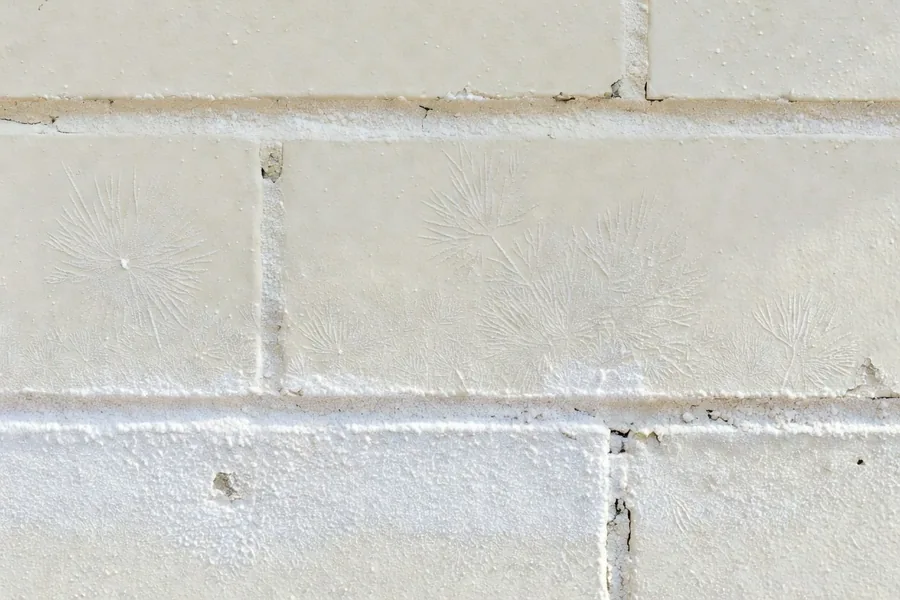
Salts left behind as the water evaporates. Brushing it off works until the next wet spell.
Almost always a non-breathable coating over a wall that needs to dry outward. The coating is not failing — it is working, in the wrong place.
Salt crystallisation forcing the surface apart. Worst on the coastal strip and usually well advanced before anyone calls it damp.
Not damp. That pattern points at ground movement. Across much of Newcastle that means mine subsidence. That may be compensable, and it needs a different call entirely.
Flash flooding out of the creek catchments charges the ground for weeks. Flood-legacy damp is saltier and more destructive than the everyday kind, and it surfaces months later.
Mayfield's older brick sits on the low ground west of the city, and parts of it carry a legacy of heavy industry in the soil. It is also within the area covered by the Throsby, Styx and Cottage Creek flood study. Damp here is often a mix of a high water table and stormwater that no longer soaks away because so much of the surrounding surface is now sealed.
Mayfield splits in two. The ridge carries substantial Federation homes on better ground; the lower streets carry workers' cottages built close to the industry that employed them. The two halves fail differently — the big houses through bridged courses and added paving, the cottages through failed original courses and closed subfloors — and a quote written for one is wrong for the other.
Parts of the lower suburb sit on fill associated with a century of heavy industry, and fill of that kind is variable: it can hold water in one place and drain in another over a few metres. That variability is why moisture readings need to be taken across a whole wall rather than at the one spot the owner points to.
Newcastle gets a little over 1,100mm of rain a year. Much of it falls in short heavy bursts. East coast lows and summer storms drop more in a few hours than the drains were built to carry. Water arriving that fast does not soak in evenly. It runs off, and it ponds against whatever is in its way. It then sits in the soil around and under the footings for weeks, long after the street looks dry.
Readings up the wall, then outside: levels, the rear lane, paving, downpipes, and whatever render or paint is already stopping the wall breathing.
Stepped cracking points at ground movement, not moisture. In a Mine Subsidence District that is a different call and possibly a compensable one.
Ground above the damp course is the fix, not a second damp course below it. Injecting under a bridge changes nothing and you will have paid for it.
Salt left in the render pulls moisture out of the air on its own. A wall with a perfect new course and its old plaster still reads damp, and the owner assumes the course failed.
The full sequence, and why the order matters in Mayfield, is set out on our how it works page.
Rising damp is groundwater climbing a wall. Everything else — the salt, the lifting paint, the smell — follows from that one fact.
Everything we get asked, in one place. If your question is not here, ring and ask it.
An inspection works out which problem you actually have. Most of them are cheaper to fix than the one everyone assumes.
There is no licence called damp proofing. The one that matters is waterproofing, and it is worth two minutes to check.
A chemical course is a barrier injected into the mortar line. It is right when there is no working damp course, and wrong when there is one that has been buried.
Does the crack through your brickwork step down the mortar joints? That points at ground movement, not moisture. It also changes who you should be ringing.
Nobody can price damp work properly over the phone, because the cost is set by what the wall is and what is already in it. A single-skin terrace wall, a rendered inter-war cavity wall and a heritage-listed sandstone facade are three different jobs. What we can give you is the range these land in around Newcastle before anyone visits.
These are the ranges we see quoted around Newcastle. They are wide on purpose. One wall can cost several times what another does. The thickness, the access and how much salt is already in it all change the price.
| Work | Indicative range | What it covers |
|---|---|---|
| On-site assessment and written diagnosis | $450 plus GST | Readings taken at intervals up each affected wall, an external check of levels, lanes and downpipes, and a written finding. Where there is cracking it also says whether you should be calling Subsidence Advisory NSW instead. |
| Chemical damp-proof course, per metre | $170 - $330 | Injected into the mortar course. A shared terrace wall sits at the upper end because of access and because it can only be worked from one side. |
| Salt-retarding replaster, per square metre | $120 - $260 | Contaminated render off, breathable system on. Near the water this is rarely optional — the southerly loads the wall with salt from outside while the damp loads it from within. |
| Drainage and ground-level correction | $900 - $6,000 | Dropping a path, cutting a bed back, taking a downpipe away from the wall. On the terraces this often means the rear lane, where decades of resurfacing have raised the ground against the back wall. |
| Subfloor ventilation improvement | $1,200 - $4,500 | For the timber-floored cottages, where a closed subfloor holds moisture under the house. |
Prices are indicative ranges only. Every fixed price quote follows an on-site assessment.
The physical work is usually a few days. The drying is the long part. A wall dries at roughly one month for every ten millimetres of thickness. A double brick wall can take most of a year before it is ready to paint. Finishing early undoes the work.
Usually not. Australian home policies commonly exclude gradual damage, wear and tear and lack of maintenance, and rising damp falls into that group. A sudden event is treated differently — a burst pipe, for example, is often covered. Read your own policy wording, and ask your insurer before you assume either way.
You can buy an injection kit. Home attempts usually fail for one of two reasons. Either the diagnosis was wrong and the wall never had rising damp. Or the salt already in the wall was left there, so the mark comes back through the new plaster. The chemical is the cheap part of the job.
Yes. NSW Fair Trading licenses residential building work. We only refer specialists who hold the licence their work needs. You can ask for the licence number and check it yourself on the Fair Trading register. A legitimate operator will not mind.
Tell us what the wall is doing. Tell us what the wall is doing and roughly when it started. There is no obligation.
We connect Newcastle property owners with independent damp specialists holding the appropriate NSW Fair Trading licence.
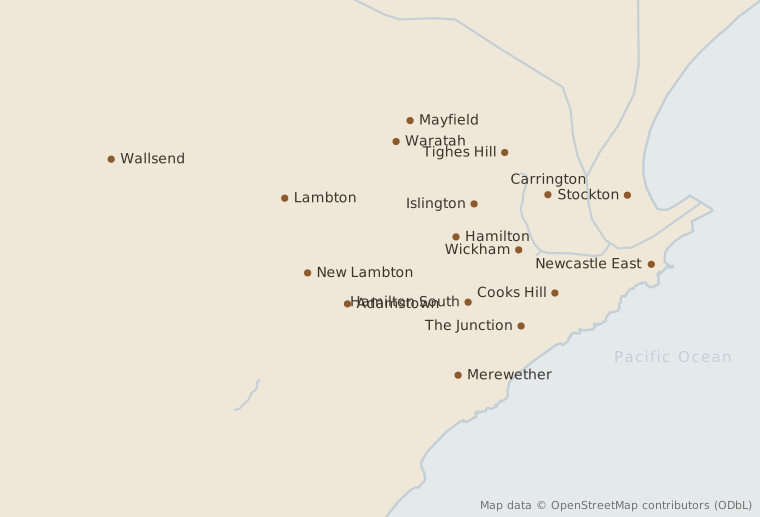
We arrange assessments across Newcastle and the lower Hunter, including:
 Rising Damp Newcastle