A large share of what gets sold as rising damp treatment in this city is a drainage job wearing a damp course's clothes.
Talk it throughRising Damp Newcastle arranges damp assessments across Newcastle and the Hunter.
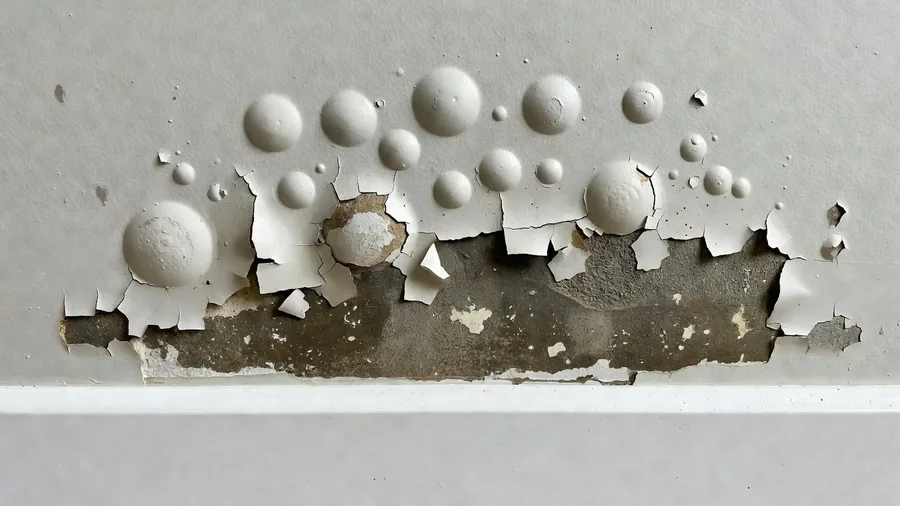
Nearly every Newcastle house built after about 1890 got a physical damp course — slate, or later bituminous felt — two courses above the ground as it stood on the day. That barrier does not wear out. What changes is the ground. Raise the soil, paving or concrete above the line and water walks over the top of a barrier that still works perfectly.
The terrace suburbs are served from behind, and those lanes have been resurfaced again and again for a hundred years, each layer over the last. The result is a lane sitting well above its original level, pressed against the back wall of every house on the row. It is the single most common bridge we see, and it is a council-owned surface, which changes what an owner can do about it.
Much of the flat land here is fill over old creek and swamp country — Wickham, Islington and Carrington especially — and it drains slowly. A downpipe spilling at the base of a wall on that ground keeps the soil charged for days after the rain stops. Moving one discharge point has ended more damp complaints than any chemical we could name.
The order matters. Say the real problem is a cracked footing. Injecting a damp course into that wall is money spent on the wrong thing. That is why the assessment comes first and the quote comes after.
Readings up the wall, then outside: levels, the rear lane, paving, downpipes, and whatever render or paint is already stopping the wall breathing.
Stepped cracking points at ground movement, not moisture. In a Mine Subsidence District that is a different call and possibly a compensable one.
Rising damp, lateral damp through a cut-in wall, a leak, condensation, or what a creek flood left behind. On a Newcastle wall all five leave a mark near the floor and only one needs a damp course.
Ground above the damp course is the fix, not a second damp course below it. Injecting under a bridge changes nothing and you will have paid for it.
Injected into one mortar course, sized to the wall thickness. A shared wall is drilled from one side only, so the spacing tightens and the day gets longer.
Salt left in the render pulls moisture out of the air on its own. A wall with a perfect new course and its old plaster still reads damp, and the owner assumes the course failed.
Roughly a month per ten millimetres of wall thickness. Double brick means most of a year before it is ready to paint, and painting early undoes the work.
These are the ranges we see quoted around Newcastle. They are wide on purpose. One wall can cost several times what another does. The thickness, the access and how much salt is already in it all change the price.
| Work | Indicative range | What it covers |
|---|---|---|
| On-site assessment and written diagnosis | $450 plus GST | Readings taken at intervals up each affected wall, an external check of levels, lanes and downpipes, and a written finding. Where there is cracking it also says whether you should be calling Subsidence Advisory NSW instead. |
| Chemical damp-proof course, per metre | $170 - $330 | Injected into the mortar course. A shared terrace wall sits at the upper end because of access and because it can only be worked from one side. |
| Salt-retarding replaster, per square metre | $120 - $260 | Contaminated render off, breathable system on. Near the water this is rarely optional — the southerly loads the wall with salt from outside while the damp loads it from within. |
| Drainage and ground-level correction | $900 - $6,000 | Dropping a path, cutting a bed back, taking a downpipe away from the wall. On the terraces this often means the rear lane, where decades of resurfacing have raised the ground against the back wall. |
| Subfloor ventilation improvement | $1,200 - $4,500 | For the timber-floored cottages, where a closed subfloor holds moisture under the house. |
Prices are indicative ranges only. Every fixed price quote follows an on-site assessment.
We arrange assessments across Newcastle and the lower Hunter, including:
 Rising Damp Newcastle